War and Peace by Leo Tolstoy – Book Review

War and Peace by Leo Tolstoy - Book Cover

Tolstoy’s monumental work titled “War and Peace,” widely regarded as one of the greatest masterpieces of world literature, looms before the average reader like a distant, unconquered peak. Many are daunted by its page count, others are plagued by fear, wondering how they will grapple with the profound thoughts of the great bearded philosopher. And surely, there are those (including the author of these lines with a holey memory) who fear they will constantly mix up Dmitry Ivanovich with Ivan Dmitrijevic. (Or with Timofey Polikarpovich.)

But everyone, please calm down!

Firstly, like many other things, the thicker the book, the better. Secondly, “War and Peace” is surprisingly easy to read. Thirdly, considering its length, it moves relatively few characters, perhaps barely a dozen main characters, if that many.

It Involves Russia!

However, “War and Peace” is not the most accurate title. Actually, it should be this: Peace, peace, peace, war, and war. This means that after the surprisingly vivid descriptions of the battles of Schöngrabern and Austerlitz, about 7 years pass before Napoleon’s campaign against Russia in 1812.

The story of these 7 years constitutes the vast majority of Tolstoy’s work, from the perspective of several aristocratic families whose fates are more or less intertwined. (The lower classes didn’t have a say in matters in Russia for about another hundred years. So it goes in this novel too.)

“I took a speed-reading course and read War and Peace in twenty minutes. It involves Russia.”

Woody Allen says.

And how right he is!

Read more

Joe Abercrombie: The Trouble with Peace – Book Review

Joe Abercrombie: The Trouble with Peace - Book Cover

What can happen in a monumental fantasy series after the supreme mage deals with everyone as he pleases? (Raymond E. Feist could tell you about this in connection with the Riftwar Cycle books.) However, Lord Bayaz doesn’t really have any opponents left on the horizon. Joe Abercrombie decided to sideline Bayaz and continue the adventure in the First Law world with The Age of Madness trilogy, introducing many new and old characters, advancing the history of the Union in a tableau-like manner, now also welcoming the industrial revolution alongside magic, spewing smoke and fire.

The second part of the trilogy, “The Trouble with Peace”, seemingly follows the same recipe as the first. The characters engage in conflicts of local significance, and nothing earth-shattering really happens. A rebellion raises its head here and there, and the strong men of The North, as usual, make trouble, but they always do that. (Let’s add that without this tough and wild masculinity, Abercrombie’s series probably wouldn’t work so well, as mostly only the Union’s bureaucracy and petty political disputes would remain.)

And yet, you find that The Age of Madness is much better to read than all of Abercrombie’s previous books. Perhaps because now the characters from earlier stories, who were often of simple (solely fighting or sulking) nature, come to life. (Except, of course, Caul Shivers, the current most dangerous man in the North. But he’s doing just fine as he is.)

It is said that truly good writers can write about everyday events in a way that makes them seem much more than they are. Well, the viewpoint characters of “The Trouble with Peace” easily accomplish this task. If we consider just the three extremely strong female protagonists of the book (a spy loyal to the point of self-sacrifice, a clairvoyant who regularly poops his pants, and Adua’s ruthless and ambitious businesswoman, who is provided with a tailwind by the Inquisition itself), we see that at least two of them are very difficult to fit into the likable personalities category, yet you eagerly flip through the pages, following their fate with bated breath.

Read more

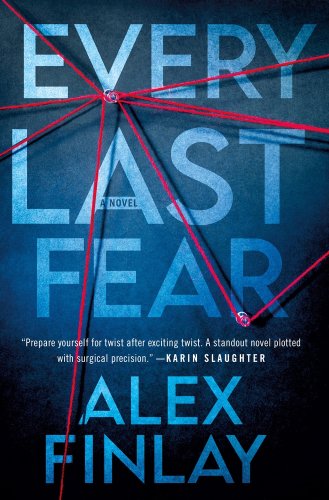
Every Last Fear by Alex Finlay – Book Review

Every Last Fear by Alex Finlay – Book cover

It can really mess up the American dream if you smash your girlfriend’s head with a big rock. Danny Pine is currently residing at the Fishkill Correctional Facility for precisely this reason. However, his family steadfastly believes in his innocence and has been fighting for his exoneration for years. Meanwhile, Danny’s estranged brother, Matt, receives terrible news: all their relatives on a Mexican vacation died in an accident. As time passes, the circumstances become increasingly suspicious. Matt decides to uncover the truth… Despite the dramatic setup in “Every Last Fear” Alex Finlay surprisingly crafts a family-friendly thriller.

The writing style of “All Your Fears” is quite unremarkable, lacking any distinctive features. Countless books with similarly subdued quality are published daily. However, Alex Finlay successfully overcomes this by structuring the novel effectively. Alongside Matt’s private investigation, you get the reminiscences of other Pine family members, leading up to the tragic conclusion.

FBI agent Sarah Keller, investigating the case, also gets dedicated chapters. So “All Your Fears” meanders through various paths, providing UNEXPECTED twists at each turn. Introducing new turns, possible suspects, and clever tricks, these sophisticated maneuvers significantly enhance the enjoyment of the thriller.

The unpredictability of Alex Finlay’s book manages to conceal the fact that the main characters of “Every Last Fear” the Pine family members, are not very well-developed. Matt, the most thoroughly introduced among them, is a true-blue average American citizen, and that’s about it.

However, it’s effortless to identify with all of them. The family-friendly label at the beginning of this review was not accidental. Finley’s thriller paints the picture of of an ordinary and supportive family, even in times of trouble – while flashing glimpses of sketchy portraits of everyday America along the way.

Family relationships receive significant emphasis – somewhat unnecessarily – in the case of Agent Keller too, who turns out to be the best-developed character in the book. (And by the end of “Every Last Fear”she slowly becomes an honorary family member.)

The impact of the book largely relies on knowing what will happen, creating a growing unease as you watch the pages of the book decrease. This oppressive feeling is particularly noticeable when reading Maggie’s chapters. Maggie, Matt Pine’s sister, is the perfect opposite of contemporary TikTok-expert teenagers: dedicated, smart, and kind, the ideal little sister in every respect.

Read more

Harrow the Ninth by Tamsyn Muir – Book Review

Harrow the Ninth book cover

The prequel to Tamsyn Muir’s novel “Harrow The Ninth” was a hugely successful sci-fi novel of 2019. “Gideon the Ninth” won several awards, including the Locus Award, and left even the most esteemed sci-fi authors in awe. “Gideon the Ninth” burst onto the science fiction scene with pulsating energy, cheeky yet clever humor, and a unique vision (necromancers + romance = necromance). Only to then shift to a larger portion of the story resembling a subdued Agatha Christie mystery.

“Harrow the Ninth” lacks that dynamic start but fortunately, it also lacks the occasional anemia found in its predecessor. However, in return, it is at times completely incomprehensible.

Literally.

The first thought-provoking moment occurs when you realize there’s not a single mention of Gideon, the protagonist of the Locked Tomb series’ first installment. It’s as if her existence has been erased. Then, the alternating chapters of the book are written in different grammatical persons (second-person singular vs third-person singular) while each chapter has the same viewpoint character: Harrowhark Nonagesimus, the charming but troubled teenage necromancer.

To top it off, characters show up in the pink, who died in the first book.

Are you into solving puzzles? Do you have a university degree? If neither applies to you, there’s a chance that up to about 80% of this book, you’ll wish “Harrow the Ninth”, to hell. And it’s no wonder if, along the way, you come to the conclusion that either reading the book titled “Harrow the Ninth” is entirely unnecessary or its predecessor, filled with the trials of Gideon Nav.

Maybe you won’t give up on Muir’s book halfway for only two reasons. One, if you’ve already crafted a compelling closing sentence for your book review and don’t want it to go to waste. The other is the Australian author’s writing style.

Read more

The Eighth Sister by Robert Dugoni – Book Review

The Eighth Sister book cover

Do they really have to reactivate a 64-year-old geezer for the CIA, just to send him to Moscow as a spy? Couldn’t they find someone older? Sure, we know that 60 is the new 40, but if the successor organization to the KGB, the FSB, were to chase this guy, wouldn’t it be better to go for a robust young sprinter instead?

And while we’re on appearances: wouldn’t a blonde, Slavic-looking person with a good-natured, foolish expression be more suitable for a Russian job than an African American? Just in case, let’s say, the FSB accidentally starts pursuing him and wants to chase him all over half of Russia. Just to blend in with the crowd more easily.

A faint chance does appear that the FSB will become suspicious of Charles Jenkins. Because he goes there to interfere with one of their operations. The Russians start eliminating the so-called seven sisters, CIA spies operating in deep cover in Russia for decades. Three sisters (Masha, Olga, and Irina – if I remember their names correctly) were already taken care of.

But not only are the sisters dwindling, Vladimir Vladimirovich, the Tsar of all Russians, activates the eighth sister! Damn! Her task is to find the other seven and kill them. Jenkins is stuck with the thankless task of messing around until the eighth sister notices him. If that happens, he must identify this evil she-devil and then get out immediately.

And now, let’s pause for a moment! Let’s use our brains!

Read more

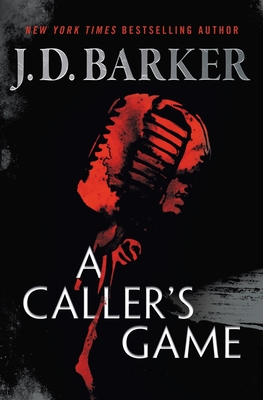
A Caller’s Game by J. D. Barker – Book Review

Caller’s Game book cover

Jordan Briggs, a radio host with a penchant for stirring controversy, receives a live call from Bernie, a caller armed with a significant amount of exploitable explosive material. However, Bernie doesn’t like to decide alone what things to blow up. Jordan’s show becomes an explosive success. Will J. D. Barker’s book, “A Caller’s Game” achieve the same success?

If you’ve read Barker’s “Four Monkey Killer” series, you’ll immediately notice that “A Caller’s Game” lacks the complexity and often overly convoluted plot structure. “A Caller’s Game” is on the opposite end, a straightforward thriller mostly set in a single location.

If you’ve seen the movie “Die Hard,” you can expect a similar experience: a skyscraper, terrorists, a bomb, and a cop perfectly positioned to take on the jerk Bernie. Plus, live broadcasting on the radio. Minus Christmas.

“A Caller’s Game” would work well as an action film, except everyone would compare it to “Die Hard,” and it would quickly fade away.

Barker’s book is perfectly bland. The male protagonist, Cole Hundley, is woodenly simple, a typical good guy. Jordan doesn’t get much more depth. Although Barker provides sharp insights at the beginning, portraying Jordan as a sharp-minded, confident media personality, nevertheless, the woman finds it very difficult to make herself likable.

Read more

Faroe by Remigiusz Mróz – Book Review

Discalimer: This book has not yet been published in English - nor have ANY of the author's books. But reading this review, anyone can easily decide WHETHER it is worth publishing.
Faroe by Remigiusz Mróz - Book Cover

What could be more depressing in the case of notoriously gloomy Scandinavian crime novels than if the setting itself is oppressive? The Faroe Islands? The smell of fish, economic stagnation, and alcoholism. Remigiusz Mróz’s crime novel titled “Feröer” doesn’t exactly inspire a strong desire to travel there for vacation.

Of course, the Faroe Islands might not be such a miserable place, and Remigiusz Mróz might be saying this just to create the necessary mood for his book. (A Hungarian, for instance, would probably feel right at home. As for the fish smell, one would probably get used to it…) And what makes you doubt Mróz’s judgment entirely is that not only is the setting depressing, but the novel itself isn’t that great either…

Sixteen-year-old Poula Lokin, a popular player in the local handball team, goes missing. The island is in turmoil, locals organize search teams, and soon Danish police officer Katrin Ellegaard arrives at the scene. As time passes, it becomes increasingly doubtful that the girl will be found alive.

Hallbjorn Olsen, the father of Poula’s teammate, was the last one to see the girl alive. The situation is further complicated by the fact that Hallbjorn, who, adhering to the island’s traditions, bravely indulged in some alcohol that day, doesn’t remember a SINGLE SECOND of that evening. So, it’s not SURPRISING that he begins to doubt himself: is it possible that he killed Poula, and then, just to be safe, hid the body?

Ellegaard starts the investigation in a hostile environment, as the Faroese dislike the Danes more than the murderers, and among the Danes, they dislike the Danish cops EVEN MORE. She is forced into an alliance with Hallbjorn.

And then you start thinking that police officers from other countries would probably view the unorthodox methods of the Danish police with some suspicion. Not only do they involve complete strangers, even suspects, in the investigation, revealing everything to them, but they also take them along to interrogations. And those left out of the interrogations are the ones who should be questioned first. (The handball team members, darn it.)

Read more

Sleeping Beauties by Stephen King & Owen King – Book Review

Sleeping Beauties by Stephen King & Owen King – Book Cover

I’ll admit, among all kinds of books, I’m particularly drawn to the hefty ones. Luckily for me, one of my favorite authors, Stephen King, has a bit of a reputation for being verbose, so he often treats us to some heavy-weight works. In Sleeping Beauties, the master storyteller, with the help of his eager son Owen, explores what might happen if all women suddenly fell asleep. Permanently.

Even just imagining it is terrifying!

Who would cook? Who would do the laundry? Who would clean up after that? I sure wouldn’t, that’s for damn sure. Not to mention, lesbian porn as a standalone art form would simply cease to exist!!!

Sleeping Beauties Is a Bit Bland

King (and diligent Owen) don’t explore this traumatic aspect of the premise in their joint work, Sleeping Beauties. Instead, they paint a broad, sweeping picture, centering the events around a small town and its women’s prison. It kicks off with a massive cast of characters, much like Under the Dome, and as in that novel, the story’s strength seems to dissipate and slowly leak away among all these characters. (Except, let’s face it, Under the Dome becomes a total snoozefest around page 70. This book, thankfully, doesn’t reach that level.)

Seasoned King readers, however, will likely feel that Sleeping Beauties falls below the usual standard. It’s as if Stephen King had his diligent son Owen subtracted from him by some mathematical equation. What’s left feels slightly sterile, stripped of the intense energy and deep characterizations typical of King. It’s almost as bare as a screenplay – if you were to turn it into a series, it wouldn’t take too much effort.

Uh, And Where’s the EVIL?!

In The Stand, the transition from normalcy to the post-apocalypse happens right at the beginning of the book. Here, the whole book is about that transition, the gradual slipping away into sleep. I won’t say that the highlighted characters (the upstanding Norcross family members) don’t carry it somewhat, but I also can’t say that all this drama (with some spousal squabbling and a complete lack of capital-letter EVIL) is particularly exciting or gripping.

One thing that does stand out, though, is how much calmer life on Earth would be if women took charge of everything from here on out. No arms race, no war, no worries—maybe just a bit more gossip, and that’s all. (Okay, by that logic, it would be great if the entire government packed up and left immediately, leaving only Kamala Harris and the other chicks behind! Hmm, wait a second. Never mind. Never mind!)

And locked away, yet still carefree,
Beams Eve, offspring of a big tree.

Wait, what?

No Need to Get Excited

Indeed, the catalyst of Sleeping Beauties, the Wooden Lady, aka Evie Black, enters the scene as an Omniscient Bee, an infallible oracle & Terminator, instantly removing any stakes from the start. So there’s no true dramatic clash, or if there is, it’s minuscule and entirely predictable from a mile away. (In case you still don’t get the hint, Evie helpfully spells it out halfway through the book for Dr. Norcross – and thus, for you, too – what the whole game is about. Thanks a lot, Owen, that was a brilliant idea of yours, saving us from any unnecessary suspense or thrills.)

Sleeping Beauties Is a Decent Piece of Craftsmanship

However, before completely ruining everyone’s appetite for this decent piece of work, let’s acknowledge that scene by scene, the book actually works. Despite the overwritten bits, the dragging pace, and the excess of unnecessary characters, Sleeping Beauties manages to keep you hooked because it’s packed with tiny conflicts, mini-stories within the story that, out of sheer curiosity, you just have to know the answers to, or that are simply engaging. What’s more, they’re mixed and paced so skillfully that they carry you through to the big finale – which, interestingly enough, turns out much blander and more boring than the drawn-out buildup.

The same paradox is present in the most unnecessary subplot – the Griner brothers’ antics, which add absolutely nothing meaningful to the whole, yet they’re the most entertaining and most “King-like” part of the book. It really seems like Dad pitched in the most here – if he didn’t write these few, darkly humorous scenes by himself. Plus, of course, he slapped his name on the cover, boosting sales for his kid’s benefit. The rest of the book was likely churned out by young Owen.

Let’s Paint the Whole Thing Green!

And Owen King is clearly a harbinger of new times. You’re not sure right away if his work is a feminist manifesto or more of a Greenpeace-style warning finger. But whichever it may be, you can’t deny there’s a need for it.

Therefore, the blog editorial team hereby awards Sleeping Beauties the Green Piece Prize, newly established this very minute (complete with a Gaia Theory Medal). Winning these is an impressive feat on its own, but if reading this book prevents even one single tough guy from giving his missus a well-deserved smack, or… oh, never mind, let’s leave it at that.

Rating: 7.7/10

Sleeping Beauties by Stephen King & Owen King
702 pages, Hardcover
Published in 2017 by Scribner

You also may be interested:
Fairy Tale by Stephen King

UPDATE:
The Green Piece Award is being retroactively granted to
Gun Island and
Earthly Remains as well.

Lancelot by Giles Kristian – Book Review

Lancelot by Giles Kristian – Book Cover

Giles Kristian deftly plucks Lancelot from the famous Arthurian legends and makes him the star of his own story. And why not? Lancelot is the bravest knight of the cycle, so he fits well at the heart of numerous battles, and, not to mention, he even wins the heart of King Arthur’s queen, guaranteeing both romantic drama and other conflicts.

Pure Emotions and a Dirty Dark Ages

Kristian devotes a surprisingly large portion of the book to Lancelot’s childhood, and you’d think it would make for a yawn-fest since, really, what excitement could there be in a future hero’s early years? But it completely proves you wrong. The early chapters are no less captivating than his more significant adult years. In fact, it’s the opposite. The thrill is there right from the beginning, as Guinevere appears on the island where Lancelot is raised, sparking feelings, followed by Merlin, the most renowned of druids, who amps up the tension.

Kristian skillfully brings the legend down to earth, stripping away almost all its mysticism and magic. (If there is any enchantment, it’s likely just a clever sleight of hand.) The legendary figures (or at least their names) do make an appearance, but in a much more grounded, human way, surrounded by all the filth and grime of the medieval world.

Read more

The Silence of the White City by Eva García Sáenz De Urturi – Book Review

The Silence of the White City by Eva García Sáenz De Urturi – Book Cover

If you’ve read tons of crime novels, you’re well aware that American, British, Scandinavian, etc., detectives work their guts out when there’s a case. They know that as time goes by, it only gets harder to catch a criminal. But what do the Basque cops do in comparison? At least, if we’re going by The Silence of the White City. Well, they just don’t give a good goddamn about the whole thing.

They take it easy over the weekend—even if Spain’s most brutal serial killer in history is massacring half the city. They head to the countryside for a little gardening, plan their upcoming weddings, that sort of thing. Meanwhile, the bodies are piling up like nobody’s business.

Something’s Off with The Silence of the White City

Eva García Sáenz De Urturi’s book feels a bit… off. The foundations are mostly solid, but the quality fluctuates wildly. There’s nothing catastrophically wrong with it, but the constant little irritations keep it from rising above average.

Like what?

Read more