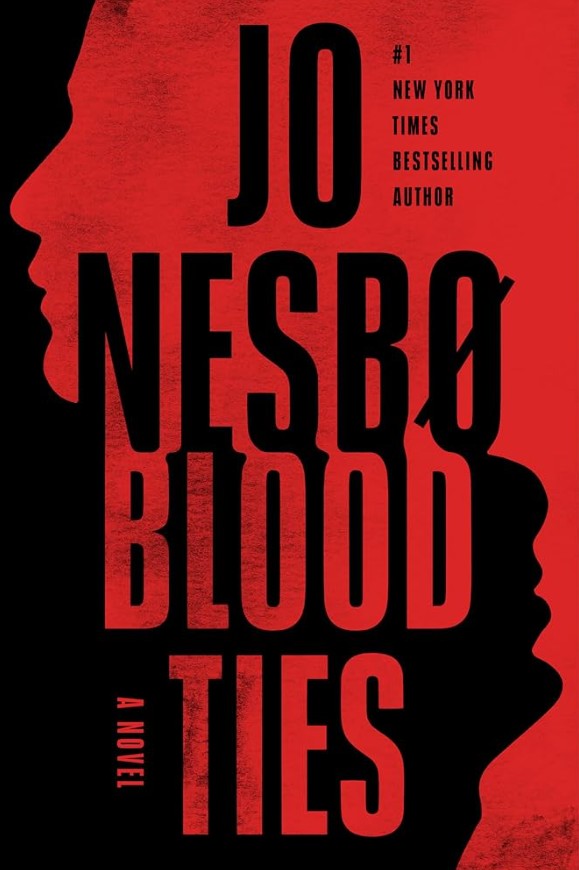
The Darkness Knows by Arnaldur Indridason – Book Review

The Darkness Knows by Arnaldur Indridason – Book Cover

After wrapping up the internationally acclaimed Erlendur series, Arnaldur Indridason launched a new crime series starring a fresh protagonist. Enter Konrád, a retired detective who first appears in The Darkness Knows—just as determined and conscientious as his famously grumpy predecessor.

Wake up! There’s a case to solve!

Inspector Erlendur might just be one of the most unconventional leading men in the history of crime fiction. A miserably moody, monosyllabic, and pathologically aloof Icelandic cop, he’s such a crashing bore that readers of his cases might find themselves turning steadily grayer and more featureless with each page—possibly even slipping into a light coma…

Well, Konrád from The Darkness Knows is only about a gram more exciting than him. I don’t know if most Icelanders are like this, or just the ones in Arnaldur Indridason’s social circle, but honestly—if Inspector Konrád ever invited you over, within twenty minutes you’d find yourself thinking that even methodically slitting your own wrists might be a more engaging way to pass the time than trying to hold a conversation with him…

The Erlendur series has 11 volumes. Nine of them have been published in Hungarian. Strangely enough, I’ve read them all. And no, no one held a gun to my head.

The reason, of course, is that Indridason more than makes up for his utterly unbearable protagonist with the actual investigative process. Just like he does with his new lead character…

Read more

Blood Ties by Jo Nesbø – Book Review

Blood Ties by Jo Nesbo – Book Cover

Roy Opgard may look like your average gas station attendant in the small Norwegian town of Os, but he’s a whole lot more than that. Much more. He’s a protector of the family, a business whiz, and, above all, a true fixer—the kind of guy who solves problems. And Os? It’s got no shortage of those. The Opgard brothers’ past (and present) is soaked in violence (see: The Kingdom). But for anyone who wants to become the king of a town like this, that’s hardly news. Except maybe the part where blood ties start to matter less and less… What follows is, naturally, a classic Jo Nesbø thriller — clever, twisty, and in this case, laced with an unusually heavy dose of melancholy.

It Was the Man at the Pump

Yep, the guy at the gas station. He did it all. Every single murder in Os… For the record, Roy Opgard is not a brutal, bloodthirsty monster. The fact that an alarming number of Os’s dearly departed met their end at his hands isn’t entirely his fault.

It took an abusive, tormenting father who targeted his own son. And a mother who looked the other way. Everything else followed from that. Oh, and of course, there was the charming, likable, but weak-willed brother, Carl, too.

The prequel to Blood TiesThe Kingdom — may be a thriller, and a solid one at that, but at its core, it’s also the life story of a lonely man longing for love. Its heavy, melancholic tone stands in sharp contrast to the looming sense of fate and the constant return of violence.

Read more

Ordeal by Jørn Lier Horst – Book Review

Everyone has pretty much given up on the missing taxi driver by now—everyone except the media, who are busy accusing the police of negligence. (Hyenas.) But the safe belonging to a recently deceased old gangster boss—who “passed away peacefully” by tumbling down the stairs—suddenly brings new information to light. And what’s more, it ties the disappearance to a high-profile murder case. The ordeal of uncovering the truth falls to Inspector William Wisting.

So who is this William Wisting guy, anyway?

He’s hands down the most likable detective in all of Norway.

If you hate the cops (and honestly, who doesn’t?!), but you’re thinking it might be time to change that, Jørn Lier Horst’s crime novels could be a good place to start.

Wisting is the textbook example of a dedicated and conscientious police officer. He’s also a devoted dad.

And if his professional track record somehow doesn’t win you over, you can always root for him to hit it off with the charming prosecutor—or maybe patch things up with his ex, who recently dumped him for NO REASON. (Fingers crossed it wasn’t because she found the poor guy boring!) … Either way, there’s something quietly compelling about the way Horst gently nudges these two love-starved characters toward each other.

Read more

The Girl in the Eagle’s Talons by Karin Smirnoff – Book Review

The Girl in the Eagle's Talons by Karin Smirnoff – Book Cover

Stieg Larsson’s Millennium trilogy—better known as The Girl with the Dragon Tattoo series—put Scandinavian crime fiction on the global map in the mid-2000s. The books, which were later adapted into film and television, became so wildly popular that even after Larsson’s death, the adventures of the eccentric yet unstoppable hacker and her loyal (though occasionally unfaithful) collaborator, Mikael Blomkvist, continued. Karin Smirnoff’s The Girl in the Eagle’s Talons is now the seventh installment in the series.

The Controversial Past of The Girl with the Dragon Tattoo

What started as a crime series quickly evolved into something more. Something bigger. The protagonist, Lisbeth Salander—a woman who, even with the bed included, barely weighs 40 kilos—soon became an action hero. More than that, she transformed into a vengeful angel, a strong, independent woman who made life a living hell for the men who deserved it.

Then came the sequels by David Lagercrantz, and… well, I have no idea. In my humble opinion, Lagercrantz is one of the weakest among the ever-brooding Nordic crime authors. I haven’t been able to finish a single book of his that I picked up. Naturally, that includes the three Millennium installments he cobbled together.

But let’s see how Karin Smirnoff approaches the iron-willed, tattooed girl—who, after two decades, is undoubtedly a tattooed woman by now.

Read more

Geiger by Gustaf Skördeman – Book Review

Geiger by Gustaf Skördeman – Book Cover

Have you been waiting for, and so far in vain, a crime novel similar to The Girl with the Dragon Tattoo, which once sparked the renaissance of Scandinavian crime fiction? If so, Gustaf Skördeman’s Geiger, the introductory novel in his series, might catch your eye. After all, it lures you in with this exact promise on the cover. (At least on the Hungarian* edition.) But what if this only makes your disappointment all the more bitter?

Sara Nowak is not a captivating character

No. She’s a mom. She’s not tattooed either. But she does struggle with anger management issues. This isn’t very useful for a police officer. And, naturally, not for a mother either. In fact, Sara Nowak is quite embarrassing as a mom. She’s the typical overprotective, constantly lecturing person who wants to guide her kids as a moral compass. No wonder they kind of hate her. (You’d hate her too if you were all turned on and went on PronHub to, uh, broaden your horizons a bit, and she barged in to tell you it was immoral towards women.)

Nowak, as a police officer, likes to rough up suspects who indeed deserve it, but how stupid is it to do this constantly in front of witnesses? Is this woman crazy?!

Moreover, despite being a trained martial artist, she somehow always ends up on the losing side in real-life situations.

Ah, damn it!

And why on earth does a lousy vice cop meddle in someone else’s investigation anyway?

So, Gustaf Skördeman didn’t quite pull this off. It’s simply impossible to like Sara Nowak, the main character. Maybe by the very end of Geiger, just a little bit. Perhaps.

Read more

Faroe by Remigiusz Mróz – Book Review

Discalimer: This book has not yet been published in English - nor have ANY of the author's books. But reading this review, anyone can easily decide WHETHER it is worth publishing.
Faroe by Remigiusz Mróz - Book Cover

What could be more depressing in the case of notoriously gloomy Scandinavian crime novels than if the setting itself is oppressive? The Faroe Islands? The smell of fish, economic stagnation, and alcoholism. Remigiusz Mróz’s crime novel titled “Feröer” doesn’t exactly inspire a strong desire to travel there for vacation.

Of course, the Faroe Islands might not be such a miserable place, and Remigiusz Mróz might be saying this just to create the necessary mood for his book. (A Hungarian, for instance, would probably feel right at home. As for the fish smell, one would probably get used to it…) And what makes you doubt Mróz’s judgment entirely is that not only is the setting depressing, but the novel itself isn’t that great either…

Sixteen-year-old Poula Lokin, a popular player in the local handball team, goes missing. The island is in turmoil, locals organize search teams, and soon Danish police officer Katrin Ellegaard arrives at the scene. As time passes, it becomes increasingly doubtful that the girl will be found alive.

Hallbjorn Olsen, the father of Poula’s teammate, was the last one to see the girl alive. The situation is further complicated by the fact that Hallbjorn, who, adhering to the island’s traditions, bravely indulged in some alcohol that day, doesn’t remember a SINGLE SECOND of that evening. So, it’s not SURPRISING that he begins to doubt himself: is it possible that he killed Poula, and then, just to be safe, hid the body?

Ellegaard starts the investigation in a hostile environment, as the Faroese dislike the Danes more than the murderers, and among the Danes, they dislike the Danish cops EVEN MORE. She is forced into an alliance with Hallbjorn.

And then you start thinking that police officers from other countries would probably view the unorthodox methods of the Danish police with some suspicion. Not only do they involve complete strangers, even suspects, in the investigation, revealing everything to them, but they also take them along to interrogations. And those left out of the interrogations are the ones who should be questioned first. (The handball team members, darn it.)

Read more

Knife by Jo Nesbo – Book Review

Knife by Jo Nesbo – Book cover

How to Write a Harry Hole Novel

What’s the formula behind every Harry Hole novel? (Including Knife). It’s made up of four elements:

1. Harry’s EPIC struggle with alcohol.

2. During the investigation, someone close to him gets killed. (You wouldn’t want to be his colleague, trust me.)

3. A dizzying mix-up of suspects that leaves you in a daze.

4. A style that’s far more fluid and lively compared to typical Scandinavian crime novels, making it nearly impossible to put down.

    The Recipe Fails

    This formula worked pretty well up until the previous novel (The Thirst), but that’s where it all fell apart. It became impossible to take seriously the endless stream of obvious red herrings, each one blatantly screaming “fake” from a mile away. And they really were just that—fake. Then, of course, another one of Harry’s hunches would come along, and the whole cycle would start over again.

    Read more

    The Boy in the Headlights by Samuel Bjørk – Book Review

    The Boy in the Headlights by Samuel Bjørk - Book Cover

    A Scandinavian crime series that doesn’t release episodes endlessly? Finally, some peace! The protagonist of Samuel Bjørk’s The Boy in the Headlights is severely troubled but otherwise a brilliant detective. The abundance of personal issues is a mandatory foundation for every Scandinavian crime novel, although brilliant detectives are relatively rare among them; they’re more often just diligent and hardworking. Okay, granted, Nesbo’s Harry Hole is genuinely brilliant to some extent, but in return, he’s an alcoholic. Based on all this, it seems that in the case of Scandinavians, intellectual abilities are directly proportional to problems—well, you can imagine what the situation is with poor Mia Krüger.

    At the beginning of each episode, the girl is either suspended or undergoing psychiatric treatment. Sometimes, if she feels like it, she wants to slash her wrists, while being a heavy alcoholic too. But she’s likable otherwise. And for some reason, dang it, they always want to fire her from her job. The devil knows why. (However, her boss, the chubby Holger, always defends her.)

    The Boy in the Headlights is not your usual template crime novel, that’s for sure; because it would be good if it were! But in this book, you’re bombarded with information from five different threads simultaneously, barely able to keep up, and you feel like you could use some brilliance yourself—because without a razor-sharp mind, you are unable to keep so many characters in mind.

    Moreover, these characters in The Boy in the Headlights appear so rarely that you wouldn’t even remember them if your mind, this delicate mechanism, didn’t work with above-average efficiency. But sometimes, damn it, a bunch of unknown figures still pop up! Dum them!

    Read more

    Fatal Isles by Maria Adolfsson – Book Reviev

    Fatal Isles by Maria Adolfsson – Book Cover

    Oops, another Scandinavian crime novel, and to top it off, written by a blonde chick. What does this most likely mean? Well, that Fatal Isles is a psycho-thriller? More precisely? Whining and whimpering? Well, no, you’re mistaken (at least in this case). Once you successfully get through the opening pages, which dissect the aftermath of an alcohol-fueled night, going into excessive detail, Maria Adolfsson’s novel turns into a pro crime story.

    The initial setup, with Karen Hornby, a criminal inspector, sleeping with her jerk boss, is entirely self-serving and could easily be dispensed with; and once the investigation kicks into gear, it won’t hold much significance. Though things get complicated, at least for Karen, as the victim turns out to be the prick boss’s wife. The boss is sidelined, and Karen takes over the investigation.

    The setting, the Doggerland archipelago, where British and Scandinavian cultures mingle, seems highly fictional. If geography isn’t your forte, and you were planning to vacation here next year, you might be disappointed. (Your feet might dangle in the water, or those darn wind turbines might drive you nuts…) Your suspicion, however, is cleverly assuaged by the islands’ professional environmental and sociological depiction, which seamlessly integrates into Fatal Isles’ text.

    It seems like a good place overall, maybe just finding the machismo in the police force a bit exaggerated. But as a one-time reader, it still affects you because you’d most likely prefer to smack the meddling colleagues with a larger-than-average shovel instead of the patient Karen.

    Karen already has a low opinion of herself, and she somewhat harps on the fact that the investigation is progressing slowly. If you were her boss, you’d let her do her job; it’s evident she knows what she’s doing. She conducts her work professionally and conscientiously, and her investigation doesn’t turn into some sort of obsession, like, say, Bosch’s investigations (see Michael Connelly’s The Concrete Blonde).

    Karen’s personal life isn’t intrusive either; even if some scenes end up slightly longer than necessary. And because of her past tragedy, which is slowly revealed to keep your curiosity piqued, you’re generally forgiving towards her.

    The investigation runs on two tracks, but reading the flashbacks, you can still guess where the resolution might lie. Yet, thanks to the cunning dosing of information, you still manage to get a bit uncertain at times. And in the end, just when you think you know everything, you get quite surprised. Or, well, maybe not you. I, for one, was surprised.

    And then, you might even get moved because, it seems, a blonde lady just can’t entirely shed her skin, and by the end of The Fatal Isles, she must include an almost unnecessary, yet emotional closure. But in the case of a fundamentally good crime novel, this can be forgiven. And its effect will surely be nullified in the next installment of Adolfsson’s Doggerland series.

    8.1/10

    Fatal Isles (Doggerland #1) by Maria Adolfsson
    514 pages, Paperback
    Published 2021 by Zaffre
    The Helicopter Heist by Jonas Bonnier – Book Review

    The Helicopter Heist by Jonas Bonnier - book cover

    A Scandinavian Crime Novel, With a Touch of Robbery

    Jonas Bonnier’s book is roughly the chance meeting on the dissecting table of Scandinavian crime and documentary fiction. Or something like that. Not entirely, though, because the genre is mostly referenced through the setting, but the usual whining is nowhere to be found. (You know, when the noble Nordic characters are relentlessly depressed from page one, yet their names and genders remain a mystery for ages.) And if you’re worried – since the book is based on a true story – that it’s just a list of facts thrown together, you can forget that, too. The Helicopter Heist has been streamlined into a full-on novel.

    In 2009, a few guys robbed the G4S cash logistics company’s Stockholm depot using a helicopter. (Hundreds of millions of kronor were flying around.) The novel tells the story of the planning and the heist.

    Bad Guys? Interesting!

    Bonnier’s book isn’t as thrilling or full of twists as the heist genre would lead you to expect. The part of the book dedicated to preparation, unsurprisingly, takes up most of the story and could be described as, at best, moderately interesting. (Obviously, things pick up during the action part.)

    Read more