The Whispering Room by Dean Koontz – Book Review

The Whispering Room by Dean Koontz - Book cover

I had never read anything by Dean Koontz before, although I’ve started several of his books. Then I stopped each one after a few pages. No big deal. They were just too uninteresting. Then came the first installment of the Jane Hawk series, and I couldn’t put it down. Well, it’s as if Dean Koontz suddenly found his stride. If you’ve read it too, well, you’ve found yourself a great conspiracy thriller. And you’ve discovered that Jane is the counterpart to your role model, Jack Reacher (see Lee Child: Die Trying) – equally effective, less brutal, and much sexier. She’s just ruthless enough to keep the story believable.

A few scumbags got what they deserved in the first part, in “The Whispering Room”, and the rest will follow in the series. The plot runs on multiple threads, perhaps to avoid repetition, because let’s face it, Jane’s investigation is pretty much the same as reading the first part all over again. Which is actually not a problem. The other thread is fine too. Then the two storylines intersect at one point, and things slow down a bit, especially with the “December update” – you might raise an eyebrow at this, which seems a bit exaggerated even for a conspiracy thriller. The Dark Zone wasn’t exactly a pillar of credibility either, but it worked within its own framework. So, if you were plotting a conspiracy against USA, you’d be better off not complicating things too much and definitely not wasting valuable nano-thingamajigs on a bunch of useless average people. And you’d probably fail miserably in Jane’s rescue mission too, which is completely pointless and instantly impractical from the main mission’s perspective. Well, for you it would be. Not so much for Jane.

Fortunately, “The Whispering Room” finds its way back in the end. The final chapters are quite exciting, and before that, Bernie Riggowitz’s appearance adds some humor and compassionate goodwill to Jane’s seemingly hopeless crusade – although it’s another question whether Bernie’s amateur acting is the clumsiest scene in the book. Whatever, Bernie’s inclusion still ends up on the positive side overall.

Another thing you might notice is that Koontz’s book tries to be much more literary compared to the first part. Emphasis on the word TRIES. He mainly achieves this by placing AT LEAST two lengthy and convoluted analogies on every page, which eventually makes your eyes start to glaze over at the sight of “as if” and “like” every now and then. What’s the point anyway? Casting pearls before swine? The Jane Hawk series is still just an average thriller. Okay, a little better than that.

7.5/10

The Whispering Room (Jane Hawk #2) by Dean Koontz
528 pages, Paperback
Published in 2018 by HarperCollins Publishers Ltd

Ross Poldark by Winston Graham – Book Review

Ross Poldark by Winston Graham - Book cover

Ross Poldark, a captain with a gunshot ankle, limps home to picturesque Cornwall from the American Revolutionary War. His father is dead, the house is in ruins, and his fiancée has replaced him with his cousin. As Ross sets out to restore his dilapidated home, his self-esteem, and embark on farming, you get a glimpse into the daily life of late 18th-century South England. It wasn’t the most uplifting place at the time: the war has plunged the country into recession, the mining industry, the cornerstone of Cornwall’s economy, is struggling, the upper classes revel while the lower ones suffer. Ross’s useless employees, inherited from his father, drink like fish, and Ross himself isn’t averse to a tipple. You have no idea how this will turn out.

Then Demelza arrives.

Demelza is a 13-year-old, impoverished half-orphan whom Ross rescues from her brutal father and takes in as a housemaid. He couldn’t have done anything better. From this point on, you can’t wait to read about Demelza; her pages, especially with their poignant nature, overshadow the rest of the novel. Demelza is getting older, becoming more astute, and then sets out to capture Ross’s attention…

Many liken the first volume of the Poldark series to “Pride and Prejudice.” I wouldn’t know, as I haven’t read it; I only started with the 1995 Colin Firth series adaptation, but after about 10 minutes, I tossed the remote due to its superficial and exaggerated nonsense. Winston Graham’s book is emotional but not sentimental. It’s much more of a family saga with social sensitivity than a romantic novel, and it doesn’t feature the silly twists typical of women’s genre fiction.

A romantic novel would end with the main characters getting married. Their story really only begins after Ross impulsively marries the girl: you, on the other hand, watch contentedly as Demelza rises to Ross’s intellectual and then social level, and by the end, they become equal partners in the relationship.

Interestingly, it’s as if Demelza not only has a positive influence on Ross and you but also on the novelist: with the marriage, the quality of the writing improves, the style becomes more cohesive, and elaborate nature descriptions start adorning the text, while the uninteresting subplots (Jim and Jinny & other miners – who occasionally had their own perspectives) either seamlessly integrate into the narrative or disappear altogether. And you notice that you CAN’T PUT DOWN this volume.

8/10 (80%)

Ross Poldark (The Poldark Saga #1) by Winston Graham
379 pages, Paperback
Published in 2015 by Sourcebooks Landmark

Horus Rising by Dan Abnett – Book Review

Horus Rising by Dan Abnett - Book cover

Have you always been a fan of epic series? Especially when it comes to sci-fi? Well, the flood of books based on the Warhammer 40,000 strategic board game is already around its 50th installment. The big question is just how seriously the whole thing can be taken as literature. Um, somewhat. Maybe. Especially if you’re male, a teenager, and sci-fi, especially the military aspect, gets you excited.

The superhuman, genetically modified space marines, led by Warlord Horus (who’s even more genetically modified), traverse the galaxy with its thousands of worlds, seen and unseen by humans, and if any of the strange new life forms don’t meet certain minimum requirements, like having more heads or tentacles than necessary, they get a good smack in the face. Which is fine so far; the fighting parts are quite, um, interesting, although even as a layman, you might notice that the Horus-led war machine UNNECESSARILY neglects the use of artillery. And the principled, rock-solid, straight-shooting Captain Loken does quite well as a protagonist.

But still, all the space marines are men. You’ve got these genetically turbocharged, tall, jaw-chiseled muscle men towering over you (Big chief Horus is four heads taller than you), and there isn’t a woman among them. You’re not the only one finding it hard to shake off (no pun intended) the horrifying image that this pumped-up herd chases each other around the crew quarters every morning with veiny victory flag, fully aroused to the EXTREME… There are only two meager references to help you understand, if you want, that this whole distinguished company, as it stands, is entirely asexual.

From here on, the story-forming forces of romantic threads and sexual tension are shot into space for the ENTIRE BOOK SERIES.

Something else you won’t find: even a spark of humor. Although in one or two cases, they almost point out to you, bro, hey, listen, humor is coming next… You can guess what the result will be when it needs to be announced specifically… not much at all.

So what’s left? Hm? The ideal of camaraderie. The pursuit of military feats. Honing military skills to the extreme. The belief in the semi-divine Horus, who is entirely like a charismatic and wise Macedonian Alexander the Great – (of course, before his brain completely rotted from paranoia and his own greatness.) If he were to glance at you, doubtless, you’d instinctively salute him.

And of course, the ultimate principle driving fleets into space, the Emperor’s justice, which boils down to if you’re not with us, you’re against us – so we smash you. The essence of the whole plot; sometimes, like in the last chapter, executed quite tastelessly and clumsily.

6,5/10 (65%)

Horus Rising (The Horus Heresy #1) by Dan Abnett
416 pages, Paperback
Published in 2014 by Games Workshop

Black Water Lilies by Michel Bussi – Book Review

Black Water Lilies by Michel Bussi - Book cover

“Three women lived in a village.
The first was mean, the second a liar, and the third an egotist.”


That’s how the prologue begins.

“The third, the youngest, was called Fanette Morelle; the second was called Stéphanie Dupain; the first, the oldest, that was me.”

And that’s how it ends.

A very clever start. It makes you curious, forcing you to read on to find out: perhaps the eldest isn’t as wicked, and the youngest isn’t as selfish. And what about Stephanie, the middle one? Admittedly, she’s a bit deceitful, but you probably wouldn’t be able to resist those lavender eyes. Another question is, Jacques, her jealous idiot of a husband would immediately thrust his hunting rifle under your nose. So, forget about her.

The blurb says that Michel Bussi’s “Black Water Lilies” is France’s most successful crime novel, which may well be true, as Monet’s name could generate a lot of publicity for it. (The story takes place in Giverny, where Monet lived and worked for 43 years.) And you end up learning quite a bit about Monet while waiting for the three storylines to converge. Maybe even more than you wanted. And the three storylines don’t really want to converge, although the old lady is entertainingly acerbic, Fanette is precocious and clever, so reading about their adventures isn’t that bad.

Stephanie’s husband is a suspect in a murder case, but the crime aspect is the thinnest part of this book, which theoretically is still a crime novel. It starts out that way, but then slowly transitions into a love drama, until it turns into melodrama towards the end. And sometimes you scratch your head because of the unnecessary detours (Monet or Sylvio’s wife) and inspector Serenac’s blunders. He’s theoretically the ace of the police force – practically, he’s a clueless guy who seems woefully unfit to lead any investigation. You don’t even understand why Lauretine, the retired cop, has been brought into the picture, whose few scenes could easily be done by Sylvio, Serenac’s hapless deputy, who would rather deserve to solve the case.

Then, in the last 60 pages, if you manage to hold out that long, which isn’t guaranteed, you realize that you’ve been thoroughly duped by Michel Bussi, as easily as pie. Especially if you’re inherently naive and gullible, like the writer of these lines, and can never guess who the killer is in advance. But even if you’re prepared for anything, you still find this trap you’ve been lured into GENIUSLY memorable. And with that, the whole novel becomes that way. (Well, memorable, not exactly genius.) And while not all the structural slip-ups are explained, you get explanations for quite a few previously not-so-well-thought-out things. And even if not all the blunders are forgiven, the rating of “Black Water Lilies” climbs up from a significantly less elegant grade to

7.2/10. (72%)

And what you absolutely didn’t expect, you get a bit of cathartic, bitter-sweet closure at the end, reminiscent of Garcia Marquez’s “Love in the Time of Cholera.” Damn, who would’ve thought?!

Well, let’s not faint from excitement.

Black Water Lilies by Michel Bussi
350 pages, Hardcover
Published in 2017 by Weidenfeld & Nicolson

The Last Mile by David Baldacci – Book Review

The Last Mile by David Baldacci - Book Cover

Amos Decker Used to Punch Above His Weight

I bet you thought Memory Man, the first book in the Amos Decker series, was pretty great. Sure, beneath the surface it was just another run-of-the-mill crime novel—but it still stood out as something oddly gripping and refreshingly original, thanks to its 286-pound, grumpy, and socially awkward main character who remembers literally everything that has ever happened to him, down to the exact second. In The Last Mile, this oddball Amos Decker returns—a man who, on top of everything, had to avenge the murder of his own family. Now that was one hell of a start.

Especially if, like me, you once swore off David Baldacci for good, convinced he was a truly awful writer. And yet, Memory Man—I’ve got to admit—turned out to be weirdly irresistible.

Long story short: Amos caught the bastard who murdered his family—that nasty little piece of garbage—and ended up joining the FBI as an outside consultant. Just like Patrick Jane in the final season of The Mentalist.

Hey—Decker’s Starting to Lose His Mind!

Read more

Die Trying by Lee Child – Book Review

Die Trying by Lee Child - Book cover

Since hardly anyone reads this blog anyway, I think I can safely admit—without becoming a public laughingstock—that Major Jack Reacher is one of my all-time role models! Yep, I said it. Big words, I know. But anyone who reads the thriller Die Trying will definitely find themselves admiring Lee Child’s ex-military cop hero from that point on.

Jack Reacher. Role Model. Period.

My role model, Major Jack Reacher, in the second installment of Lee Child’s excellent series (which I picked up again after some 20 years and accidentally reread) finds himself in the back of a van—alongside a very attractive FBI agent. She’s been kidnapped. My role model, Major Jack Reacher, just so happens to be in the wrong place at the wrong time and ends up in the van by accident. The hopelessly dumb kidnappers in Die Trying don’t just toss him out of the van—they drag him with them. These poor fools have no idea what kind of trouble they’ve just signed up for.

Because my role model, Major Jack Reacher, is strong, smart, highly trained, cunning, and more Sherlock than Sherlock Holmes himself (see: The Hound of the Baskervilles). (Just watch how he analyzes the girl at the beginning.) His sense of justice is off the charts. He’s also the best sniper around. (You can bet a few people are gonna take a bullet to the head.)

Read more

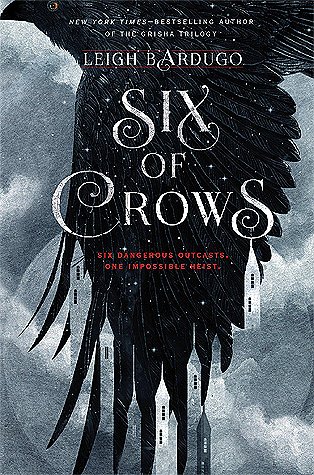
Six of Crows by Leigh Bardugo – Book Review

Six of Crows by Leigh Bardugo - Book cover

Could Six of Crows be both a fantasy and a heist novel? Yup! The toughest guy in the docks gets hired for a mission that spans across countries. The target? A scientist whose invention boosts magic users’ powers exponentially—only to burn them out just as fast. Sounds… not ideal.

Assemble the Crew

The first part of Six of Crows is all about putting the team together. And this is where Bardugo’s novel really shines. The characters are unique and memorable—hey there, Kaz, Nina, and Ghost! And the setting, Ketterdam’s slums, feels like a twisted version of an old Dutch city that might still exist today. (Limburg maybe? Or Utrecht? Can’t say for sure.)

Wait, They’re All Teenagers?

Now, here’s where things get a little weird: all the main characters are teenagers. To pull in the YA crowd? Probably. Or maybe I just hadn’t realized I was reading a YA fantasy until now. (Entirely possible.) But Bardugo’s plan doesn’t really work, because the human brain, that lovely self-correcting machine, just automatically bumps their ages up past 20. Because, let’s be honest, it’s impossible to believe that a bunch of 15–17-year-olds could be this professional, this good, at so many things.

Stir Crazy! (Jailhouse Nonsense)

Read more

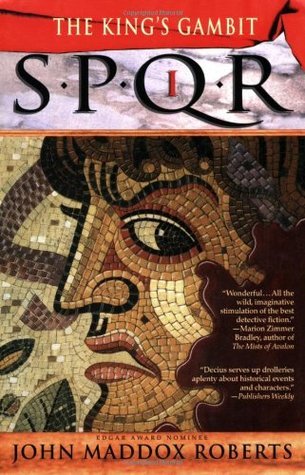
The King’s Gambit by John Maddox Roberts – Book Review

The King's Gambit by John Maddox Roberts – Book cover

In the opening volume of what is now a historical crime series spanning more than ten books, Decius, a low-ranking official at the very bottom of the Roman hierarchy, begins investigating the murder of a freed slave. The time: 70 BC, smack in the middle of the Roman Republic’s period of crisis. And guess who Decius runs into right in the very first chapter of The King’s Gambit? Bingo, you got it: the equally green and freshly ambitious Gaius Julius Caesar. Later on, of course, more famous faces from the era show up—everyone from Pompey the Great and Cicero to the scoundrel Publius Clodius Pulcher.

More of a Historical Novel than a Whodunit

Now, technically speaking, The King’s Gambit is a crime novel—it checks off a bunch of the genre’s usual boxes (forensic expert, informant, tough-guy sidekick)—but you still kind of feel like you’re reading historical fiction. The investigation itself is pretty thin, not particularly thrilling or original (there are moments when John Maddox Roberts rather clumsily uses well-known historical facts just to nudge the plot forward—hello, pirates), and most of the time it gets drowned out by long digressions into the political and historical dynamics of the day. Not least because young Decius becomes OBSESSED with the idea that he’s stumbled right into the middle of an anti-state conspiracy. And that everyone is out to get him. Um… what?!

A Conspiracy? Oh, Please.

That grand conspiracy claim eventually fizzles out and turns into nothing more than a plain old political scheme. Typical. But Decius doesn’t let go—he keeps digging into the case. No one understands why he’s MAKING SUCH A FUSS over a murdered slave. No one. Not even you.

The first book in John Maddox Roberts’s SPQR series honestly feels more like the pilot episode of a detective TV show. It’s a bit clunky, a little unsteady, but maybe not terrible—and you can’t help but hope the series eventually finds its stride.

It Feels Like You’re Actually in Rome

What definitely works in The King’s Gambit’s favor, though, is its setting, which feels completely authentic. For instance, I gave up on the similarly themed Gordianus series precisely because it lacked that feeling. It didn’t help that I had just finished reading Colleen McCullough’s epic Masters of Rome series, which made Gordianus fall flat by comparison.

Luckily, The King’s Gambit doesn’t suffer the same fate. In fact, quite the opposite. Almost every other paragraph drops in some piece of information so naturally woven into the text that it helps you better understand the political and civic backdrop of the time—or just makes you feel like you’re right there, tagging along with eager-beaver Decius through the cramped, stone-paved alleyways of ancient Rome.

Rating: 6.9/10

The King’s Gambit (SPQR #1) by John Maddox Roberts
274 pages, Paperback
Published in 1990 by Minotaur Books

You might also like:
The Fort by Adrian Goldsworthy

Gods of War by James Lovegrove – Book Review

Gods of War by James Lovegrove - Book cover

A Lukewarm Investigation Begins

In Gods of War, James Lovegrove’s crime novel, Sherlock Holmes is now in his sixties. No surprise, then, that his joints creak and crack like an old staircase. And chubby Dr. Watson? Let’s be honest—he’s not exactly in top shape anymore either. Lucky for them, they barely need to do anything in this story.

The great detective, get this, can’t even be bothered to pull off the biggest cliché in every Holmes story—using his signature method to deduce, without breaking a sweat, what extraordinary adventures his long-lost buddy had on his train ride—because, supposedly, he’s “too excited about the new case.” Which, by the way, turns out to be nothing more than a pathetic little burglary.

(Feels a bit cheap, doesn’t it? I mean, how hard would it have been for Lovegrove to throw in that Watson’s seatmate across the aisle was an elderly, half-limping horse trader from Devonshire on his way to buy feed for his prize stallion, Oxhead—while to his right sat a spinster in a pheasant-feathered hat, off to visit her sister, who suffers from trichotillomania, casually reading Northanger Abbey, fourth edition.

Cost him nothing.)

Laurel and Hardy Back on the Case!

Read more

Blood Will Follow by Snorri Kristjansson – Book Review

Blood Will Follow by Snorri Kristjansson - Book Cover

In the Name of Christ – with an Axe

King Olav Tryggvason has decided to unite all of Norway in the holy name of Christ. And anyone unwilling to share his faith is going to get a good solid whack on the head with an axe. The various plot threads all come together beneath the walls of the city of Stenvik, where a bunch of old-school Vikings dissenters — stubbornly clinging to their traditional, low-maintenance religion — are planning to whack King Olav on the head right back, also with an axe. So yeah—forget the word of Christ. Blood Will follow.

The first book in Snorri Kristjansson’s trilogy, Swords of Good Men, was a pretty decent historical novel — though you might’ve lost your enthusiasm a bit with the overload of hard-to-tell-apart characters, the constant switching of points of view, and the somewhat clumsy start to the plot. Luckily, during the siege, the story picked up steam. Though the inclusion of fantasy-style blood magic in an otherwise historically grounded novel might have caused a few readers to raise an eyebrow.

Everything Clashes With Everything Else

Read more