The Fort by Adrian Goldsworthy – Book Review

The Fort by Adrian Goldsworthy – Book Cover

During Emperor Trajan’s reign, Rome fought multiple wars against the Dacians, who inhabited what is now Romania. The tribes united under Decebalus posed a constant threat to the empire—just as the Romans did to them. Flavius Ferox, centurion and protagonist of Adrian Goldsworthy’s City of Victory trilogy, takes command of the frontier fort of Piroboridava. If the Dacian armies, preparing for war, decide to march, this fort will be the last line of defense before the provinces.

Through the Eyes of a Historian

Following his Vindolanda novels, Adrian Goldsworthy continues the adventures of his British-born Roman officer, who now finds himself on the empire’s opposite frontier, accompanied by his warrior-queen wife, Claudia Enica. Despite being far from the City and focusing on the relatively low-ranking officers of a minor fort, Goldsworthy still manages to paint a complex picture of how the Roman Empire operated—particularly from a military perspective.

As Flavius Ferox strengthens the fort’s defenses against the looming war, all while dealing with the resentment of the tribal warriors under his command and the rightful anger of his warrior-spirited wife—historian Goldsworthy, too, demonstrates his expertise.

However, if you’ve already prepped for Roman history by devouring classics—say, Colleen McCullough’s brilliant Masters of Rome series—and consider yourself something of an expert, you might still find the sheer volume of Latin terminology overwhelming, from military ranks to soldier slang.

Read more

Legion versus Phalanx by Myke Cole – Book Review

Legion versus Phalanx by Myke Cole - Book Cover

The one with the longer stick wins, right?

“The Epic Struggle for Infantry Supremacy in the Ancient World.” Yeah, but which one triumphs? The phalanx or the legion? As the reviews on this blog are typically spoiler-free, don’t expect me to give that away. Those astute readers who can dredge up from the depths of their minds the not-so-well-known fact about whether the Romans or the Greek-Macedonian tandem held sway over the Mediterranean coastline for hundreds of years, might have some preliminary guesses. The book Legion versus Phalanx is mainly for those who have no idea.

Myke Cole is an amateur military historian but also an enthusiastic and practicing soldier. Through six ancient battles, he attempts to provide a clear answer to this burning question, using a wealth of source material; alongside the well-known ancient historians, he also quotes authors you’ve probably never heard of in your life.

Moreover, Myke Cole skillfully dramatizes the events, making the battle descriptions particularly thrilling. (Though, in the case of the unfortunate water-carrying mule at the Battle of Pydna, he may have gone a bit overboard.)

Read more

The King’s Gambit by John Maddox Roberts – Book Review

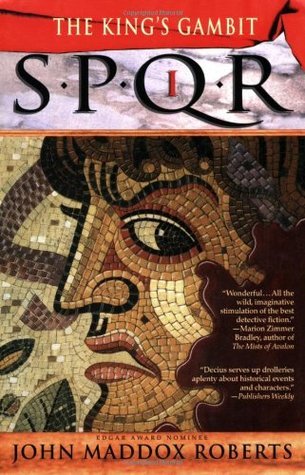
The King's Gambit by John Maddox Roberts – Book cover

In the opening volume of what is now a historical crime series spanning more than ten books, Decius, a low-ranking official at the very bottom of the Roman hierarchy, begins investigating the murder of a freed slave. The time: 70 BC, smack in the middle of the Roman Republic’s period of crisis. And guess who Decius runs into right in the very first chapter of The King’s Gambit? Bingo, you got it: the equally green and freshly ambitious Gaius Julius Caesar. Later on, of course, more famous faces from the era show up—everyone from Pompey the Great and Cicero to the scoundrel Publius Clodius Pulcher.

More of a Historical Novel than a Whodunit

Now, technically speaking, The King’s Gambit is a crime novel—it checks off a bunch of the genre’s usual boxes (forensic expert, informant, tough-guy sidekick)—but you still kind of feel like you’re reading historical fiction. The investigation itself is pretty thin, not particularly thrilling or original (there are moments when John Maddox Roberts rather clumsily uses well-known historical facts just to nudge the plot forward—hello, pirates), and most of the time it gets drowned out by long digressions into the political and historical dynamics of the day. Not least because young Decius becomes OBSESSED with the idea that he’s stumbled right into the middle of an anti-state conspiracy. And that everyone is out to get him. Um… what?!

A Conspiracy? Oh, Please.

That grand conspiracy claim eventually fizzles out and turns into nothing more than a plain old political scheme. Typical. But Decius doesn’t let go—he keeps digging into the case. No one understands why he’s MAKING SUCH A FUSS over a murdered slave. No one. Not even you.

The first book in John Maddox Roberts’s SPQR series honestly feels more like the pilot episode of a detective TV show. It’s a bit clunky, a little unsteady, but maybe not terrible—and you can’t help but hope the series eventually finds its stride.

It Feels Like You’re Actually in Rome

What definitely works in The King’s Gambit’s favor, though, is its setting, which feels completely authentic. For instance, I gave up on the similarly themed Gordianus series precisely because it lacked that feeling. It didn’t help that I had just finished reading Colleen McCullough’s epic Masters of Rome series, which made Gordianus fall flat by comparison.

Luckily, The King’s Gambit doesn’t suffer the same fate. In fact, quite the opposite. Almost every other paragraph drops in some piece of information so naturally woven into the text that it helps you better understand the political and civic backdrop of the time—or just makes you feel like you’re right there, tagging along with eager-beaver Decius through the cramped, stone-paved alleyways of ancient Rome.

Rating: 6.9/10

The King’s Gambit (SPQR #1) by John Maddox Roberts
274 pages, Paperback
Published in 1990 by Minotaur Books

You might also like:
The Fort by Adrian Goldsworthy