On Target by Mark Greaney – Book Review

On Target by Mark Greaney – Book Cover

Mark Greaney’s Gray Man book series received a new boost when Netflix produced a film (IMDb) based on the first book with a substantial budget. It’s a shame the movie didn’t turn out too well. Perhaps because the book it’s based on wasn’t that great either? (There’s a chance.) Let’s see how the second installment, “On Target,” fares.

Courtland Gentry, alias the Gray Man, a hired assassin. It’s not the best profession in the world, by any means, but one can’t be too choosy. Especially when his former employer, the CIA, puts him on a hit list. The Gray Man is thus forced to kill people of various other colors for his daily bread. His latest assignment takes him to Sudan, where the ruthless dictator, President Bakri Abbud is really starting to push the genocide way too far.

But even before the protagonist heads to Africa, the introduction of “On Target” makes it clear that the Gray Man is the most compassionate hitman in the whole world.

The Gray Man is the most compassionate hitman in the world!

This is not a joke! It’s a well-known fact that among those who kill for money, there are remarkably many noble and kind employee. For whom it’s a basic rule to only deal with evil targets. (See: Stephen King: Billy Summers.) However, Mark Greaney’s protagonist stands out even among them for his compassion. When he sits down to have a chat over a few shots (of whiskey) with his next target (another hitman, who is not as kind-hearted), you can’t help but sympathize with the latter’s personal issues. The Gray Man feels the same way. You practically have to choke him to bring out a little callousness.

Read more

A.K. Larkwood: The Unspoken Name – Book Review

A.K. Larkwood: The Unspoken Name - Book Cover

There’s no denying that with the Internet, the golden age of fantasy writers has arrived. With a slight exaggeration, publishers release every piece of crap. If someone reads a lot of fantasy, they can easily find that from the three newly released books in the genre, (at least) two are mediocre junk. Especially if it’s a debut author. Fortunately, this is not the case with A.K. Larkwood’s first book, “The Unspoken Name”.

Walking Pace

At the beginning of the book, your doubts may not completely dissipate though. “The Unspoken Name” immediately grabs your imagination with its completely unique world-building, but initially it still seems rather nondescript. When the Chosen Bride, Csorwe, starts climbing the stairs towards the mysterious god’s sanctuary, presumably to be consumed as their next meal, a more experienced writer might have written this scene as far more chilling. Csorwe just casually walks up.

But the same blandness is evident in the rescuer, the wizard Belthandros Sethennai. This gentleman is a powerful mage, but it doesn’t really come across. He seems more like someone who claims to be this, but doesn’t really provide any evidence of it.

It takes some time before you realize they’re both just like that.

A. K. Larkwood, however, ensures that you don’t give up until the real adventures begin.

Read more

When You Are Mine by Michael Robotham – Book Review

When You Are Mine by Michael Robotham - Book Cover

Michael Robotham, the Australian author of the Joseph O’Loughlin series, enjoys stimulating his own mind with standalone novels. However, reading about the adventures of policewoman Philomena McCarthy, it quickly becomes apparent right from the beginning of the book that this lady herself could easily handle an entire series. With his book “When You Are Mine,” Robotham adds to the lineup of strong female characters who seem to have been created for crime novel protagonists.

Do you hate those miserable cops? If you didn’t before, you’ll hate those bastards by the end of the book! Philomena McCarthy is just a simple patrolwoman, but guided by her own sense of justice, she stands up against anyone to protect the innocent. Now, who do you think is that dirty, rotten scoundrel, terrorizing both his wife and mistress, who clashes with Philomena?

Another cop.

Moreover, all his scumbag buddies rally behind him without a second thought. Of course, they’re all cops too. Heck, even the other cops who aren’t his buddies side with him. And they all behave in a really scummy way towards the girl.

Michael Robotham’s book makes you suddenly realize (besides making you hate the fuzz) that your blood pressure is through the roof, and you need to take breaks constantly just to calm down.

Read more

War and Peace by Leo Tolstoy – Book Review

War and Peace by Leo Tolstoy - Book Cover

Tolstoy’s monumental work titled “War and Peace,” widely regarded as one of the greatest masterpieces of world literature, looms before the average reader like a distant, unconquered peak. Many are daunted by its page count, others are plagued by fear, wondering how they will grapple with the profound thoughts of the great bearded philosopher. And surely, there are those (including the author of these lines with a holey memory) who fear they will constantly mix up Dmitry Ivanovich with Ivan Dmitrijevic. (Or with Timofey Polikarpovich.)

But everyone, please calm down!

Firstly, like many other things, the thicker the book, the better. Secondly, “War and Peace” is surprisingly easy to read. Thirdly, considering its length, it moves relatively few characters, perhaps barely a dozen main characters, if that many.

It Involves Russia!

However, “War and Peace” is not the most accurate title. Actually, it should be this: Peace, peace, peace, war, and war. This means that after the surprisingly vivid descriptions of the battles of Schöngrabern and Austerlitz, about 7 years pass before Napoleon’s campaign against Russia in 1812.

The story of these 7 years constitutes the vast majority of Tolstoy’s work, from the perspective of several aristocratic families whose fates are more or less intertwined. (The lower classes didn’t have a say in matters in Russia for about another hundred years. So it goes in this novel too.)

“I took a speed-reading course and read War and Peace in twenty minutes. It involves Russia.”

Woody Allen says.

And how right he is!

Read more

The Witcher – The First Three Seasons – Series Review

The Witcher series poster

Andrzej Sapkowski, the Polish fantasy author, has incredibly good luck. Actually, he has two strokes of luck. His overwritten, rambling, and disjointed “Witcher” series first inspired a successful role-playing game, and then Netflix decided to give a shot to the magic-supported, mutant monster hunter, Geralt of Rivia. Sapkowski and the subscribers of the streaming platform couldn’t have been luckier. (Maybe just a tiny bit luckier.)

Because the claim applies to Sapkowski just as much as it does to the renowned sci-fi writer Kilgore Trout*: his ideas are good, but his style is terrible. However, the Netflix series cleverly pruned away what was unnecessary and kept the rest. “The Witcher” builds a twisting, exciting, and unique medieval world, full of great heroes, magic, adventures, and plenty of emotional highs. At least in the first season.

Season 1: The Witcher Starts with a Full Swing

The books’ occasionally fairy-tale-like twists barely make an appearance here; the striga reverting to human upon hearing a rooster’s crow, and the genie fulfilling three wishes remain, but let’s not be greedy.

The series, however, excels in many aspects where the Polish author falls short. The perpetually mournful Geralt, constantly sulking in the books, is nowhere to be found; instead, we have a laconic, endlessly cynical yet still feeling hero. Henry Cavill was truly born to play a Witcher. The paper-based version’s silly and dim-witted Dandelion, whom you’d rather smack with his own lute incessantly, has transformed into a charming and lovable rogue. And Yennefer… well, we all know what powerful sorceresses are like. Yennefer in the series is just as arrogant and insufferable but also a sexy beast. Moreover, some of the most emotional scenes in the early episodes are tied to her. Of course, this required the creators to thoroughly and perhaps somewhat unjustifiably alter the timeline of the books’ plot.

Read more

Joe Abercrombie: The Trouble with Peace – Book Review

Joe Abercrombie: The Trouble with Peace - Book Cover

What can happen in a monumental fantasy series after the supreme mage deals with everyone as he pleases? (Raymond E. Feist could tell you about this in connection with the Riftwar Cycle books.) However, Lord Bayaz doesn’t really have any opponents left on the horizon. Joe Abercrombie decided to sideline Bayaz and continue the adventure in the First Law world with The Age of Madness trilogy, introducing many new and old characters, advancing the history of the Union in a tableau-like manner, now also welcoming the industrial revolution alongside magic, spewing smoke and fire.

The second part of the trilogy, “The Trouble with Peace”, seemingly follows the same recipe as the first. The characters engage in conflicts of local significance, and nothing earth-shattering really happens. A rebellion raises its head here and there, and the strong men of The North, as usual, make trouble, but they always do that. (Let’s add that without this tough and wild masculinity, Abercrombie’s series probably wouldn’t work so well, as mostly only the Union’s bureaucracy and petty political disputes would remain.)

And yet, you find that The Age of Madness is much better to read than all of Abercrombie’s previous books. Perhaps because now the characters from earlier stories, who were often of simple (solely fighting or sulking) nature, come to life. (Except, of course, Caul Shivers, the current most dangerous man in the North. But he’s doing just fine as he is.)

It is said that truly good writers can write about everyday events in a way that makes them seem much more than they are. Well, the viewpoint characters of “The Trouble with Peace” easily accomplish this task. If we consider just the three extremely strong female protagonists of the book (a spy loyal to the point of self-sacrifice, a clairvoyant who regularly poops his pants, and Adua’s ruthless and ambitious businesswoman, who is provided with a tailwind by the Inquisition itself), we see that at least two of them are very difficult to fit into the likable personalities category, yet you eagerly flip through the pages, following their fate with bated breath.

Read more

Deadly Class – Vol. 7: Love Like Blood by by Rick Remender · Wes Craig – Comic Book Review

Deadly Class – Vol. 7: Love Like Blood by by Rick Remender · Wes Craig - Comic Book Cover

If you were a school psychologist at the King’s Dominion Atelier of the Deadly Arts, you would definitely be stuffing benzodiazepines into your own mouth by the handful. Rick Remender and Wes Craig’s Deadly Class seems perfect for apprentice assassins at first glance, but in reality, it wouldn’t work.

A high school for the children of criminals? Where students trained for killing roam armed?! Come on!

You’ve probably heard of the dramaturgical principle that if a loaded gun appears on stage, sooner or later it will be fired. Well, for those attending the assassin class, firing the gun – with classmates in the crosshairs – is part of the prescribed curriculum.

The King’s Dominion Atelier of the Deadly Arts is essentially a psychopath training ground, which would only work until the first freshly graduated seniors returned home to mommy and daddy. However, instead of a resourceful karate champion, ninja, or commando, the parents could welcome home unpredictable wrecks devoid of any human emotions. Afterward, dissatisfied ancestors from all over the world would flock to San Francisco to demand a refund of tuition… and incidentally, to chop the entire teaching staff into tiny pieces.

Rick Remender, the master of the most unbelievable twists, organizes a class trip to Mexico in the seventh part of the Deadly Class. And you, the reader, are supposed to believe that Marcus, one of the most repulsive protagonists in comic literature, successfully takes on a group of Yakuza. Man, he got expelled! Not to mention that he only attended for a year, most of which he was totally high on drugs!

Read more

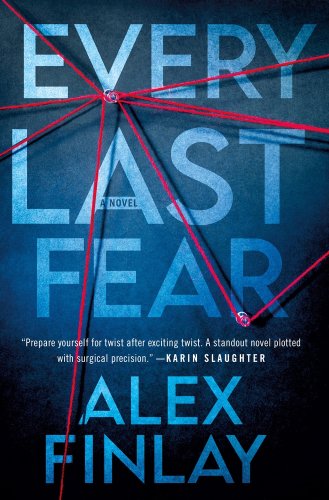
Every Last Fear by Alex Finlay – Book Review

Every Last Fear by Alex Finlay – Book cover

It can really mess up the American dream if you smash your girlfriend’s head with a big rock. Danny Pine is currently residing at the Fishkill Correctional Facility for precisely this reason. However, his family steadfastly believes in his innocence and has been fighting for his exoneration for years. Meanwhile, Danny’s estranged brother, Matt, receives terrible news: all their relatives on a Mexican vacation died in an accident. As time passes, the circumstances become increasingly suspicious. Matt decides to uncover the truth… Despite the dramatic setup in “Every Last Fear” Alex Finlay surprisingly crafts a family-friendly thriller.

The writing style of “All Your Fears” is quite unremarkable, lacking any distinctive features. Countless books with similarly subdued quality are published daily. However, Alex Finlay successfully overcomes this by structuring the novel effectively. Alongside Matt’s private investigation, you get the reminiscences of other Pine family members, leading up to the tragic conclusion.

FBI agent Sarah Keller, investigating the case, also gets dedicated chapters. So “All Your Fears” meanders through various paths, providing UNEXPECTED twists at each turn. Introducing new turns, possible suspects, and clever tricks, these sophisticated maneuvers significantly enhance the enjoyment of the thriller.

The unpredictability of Alex Finlay’s book manages to conceal the fact that the main characters of “Every Last Fear” the Pine family members, are not very well-developed. Matt, the most thoroughly introduced among them, is a true-blue average American citizen, and that’s about it.

However, it’s effortless to identify with all of them. The family-friendly label at the beginning of this review was not accidental. Finley’s thriller paints the picture of of an ordinary and supportive family, even in times of trouble – while flashing glimpses of sketchy portraits of everyday America along the way.

Family relationships receive significant emphasis – somewhat unnecessarily – in the case of Agent Keller too, who turns out to be the best-developed character in the book. (And by the end of “Every Last Fear”she slowly becomes an honorary family member.)

The impact of the book largely relies on knowing what will happen, creating a growing unease as you watch the pages of the book decrease. This oppressive feeling is particularly noticeable when reading Maggie’s chapters. Maggie, Matt Pine’s sister, is the perfect opposite of contemporary TikTok-expert teenagers: dedicated, smart, and kind, the ideal little sister in every respect.

Read more

Harrow the Ninth by Tamsyn Muir – Book Review

Harrow the Ninth book cover

The prequel to Tamsyn Muir’s novel “Harrow The Ninth” was a hugely successful sci-fi novel of 2019. “Gideon the Ninth” won several awards, including the Locus Award, and left even the most esteemed sci-fi authors in awe. “Gideon the Ninth” burst onto the science fiction scene with pulsating energy, cheeky yet clever humor, and a unique vision (necromancers + romance = necromance). Only to then shift to a larger portion of the story resembling a subdued Agatha Christie mystery.

“Harrow the Ninth” lacks that dynamic start but fortunately, it also lacks the occasional anemia found in its predecessor. However, in return, it is at times completely incomprehensible.

Literally.

The first thought-provoking moment occurs when you realize there’s not a single mention of Gideon, the protagonist of the Locked Tomb series’ first installment. It’s as if her existence has been erased. Then, the alternating chapters of the book are written in different grammatical persons (second-person singular vs third-person singular) while each chapter has the same viewpoint character: Harrowhark Nonagesimus, the charming but troubled teenage necromancer.

To top it off, characters show up in the pink, who died in the first book.

Are you into solving puzzles? Do you have a university degree? If neither applies to you, there’s a chance that up to about 80% of this book, you’ll wish “Harrow the Ninth”, to hell. And it’s no wonder if, along the way, you come to the conclusion that either reading the book titled “Harrow the Ninth” is entirely unnecessary or its predecessor, filled with the trials of Gideon Nav.

Maybe you won’t give up on Muir’s book halfway for only two reasons. One, if you’ve already crafted a compelling closing sentence for your book review and don’t want it to go to waste. The other is the Australian author’s writing style.

Read more

The Eighth Sister by Robert Dugoni – Book Review

The Eighth Sister book cover

Do they really have to reactivate a 64-year-old geezer for the CIA, just to send him to Moscow as a spy? Couldn’t they find someone older? Sure, we know that 60 is the new 40, but if the successor organization to the KGB, the FSB, were to chase this guy, wouldn’t it be better to go for a robust young sprinter instead?

And while we’re on appearances: wouldn’t a blonde, Slavic-looking person with a good-natured, foolish expression be more suitable for a Russian job than an African American? Just in case, let’s say, the FSB accidentally starts pursuing him and wants to chase him all over half of Russia. Just to blend in with the crowd more easily.

A faint chance does appear that the FSB will become suspicious of Charles Jenkins. Because he goes there to interfere with one of their operations. The Russians start eliminating the so-called seven sisters, CIA spies operating in deep cover in Russia for decades. Three sisters (Masha, Olga, and Irina – if I remember their names correctly) were already taken care of.

But not only are the sisters dwindling, Vladimir Vladimirovich, the Tsar of all Russians, activates the eighth sister! Damn! Her task is to find the other seven and kill them. Jenkins is stuck with the thankless task of messing around until the eighth sister notices him. If that happens, he must identify this evil she-devil and then get out immediately.

And now, let’s pause for a moment! Let’s use our brains!

Read more